



A practitioner view on why agentic AI in real estate is the architectural answer to fragmented pilots, and how forward-leaning operators are building agentic AI for real estate as a compounding advantage rather than a one-time efficiency play.

Why Agentic AI in Real Estate Has Moved Past the Pilot Era
Every major real estate operator has AI running somewhere in the business. Prospect engagement bots answer leasing inquiries at 2 a.m. Anomaly detection flags unusual patterns in financial transactions. Predictive maintenance models surface work orders before residents file complaints. Energy optimization tools scan portfolio-wide consumption against capital improvement plans.
These pilots work and most of them deliver measurable return. However, most of them share a structural problem: they operate in isolation.
Each one was stood up separately, by a different team, with a different vendor, against a different system of record. They do not share data, governance, or a view of the resident, the asset, or the portfolio. Individually, they are useful, however, collectively, they are a fragmented estate that creates more complexity than it resolves.
The inflection point for agentic AI in real estate is not whether to use AI. That decision has already been made, across the industry, at every scale. The real question is whether operators build an AI estate that compounds over time, or one that fragments further with every new pilot.
Agentic AI for real estate is the architectural answer to that question.

What Agentic AI Means for Real Estate Operators
The term “agentic AI” is overused and underexplained. Before examining what it means for real estate specifically, it is worth being precise about what it actually describes.
An AI agent is a system that can perceive its environment, make decisions, take actions, and observe the results with some degree of autonomy. Unlike a chatbot that answers a question, an agent completes a workflow. Unlike a model that scores an application, an agent can retrieve the application, evaluate it against configured criteria, check for exceptions, route for approval, and update the system of record as a continuous sequence of decisions and actions.
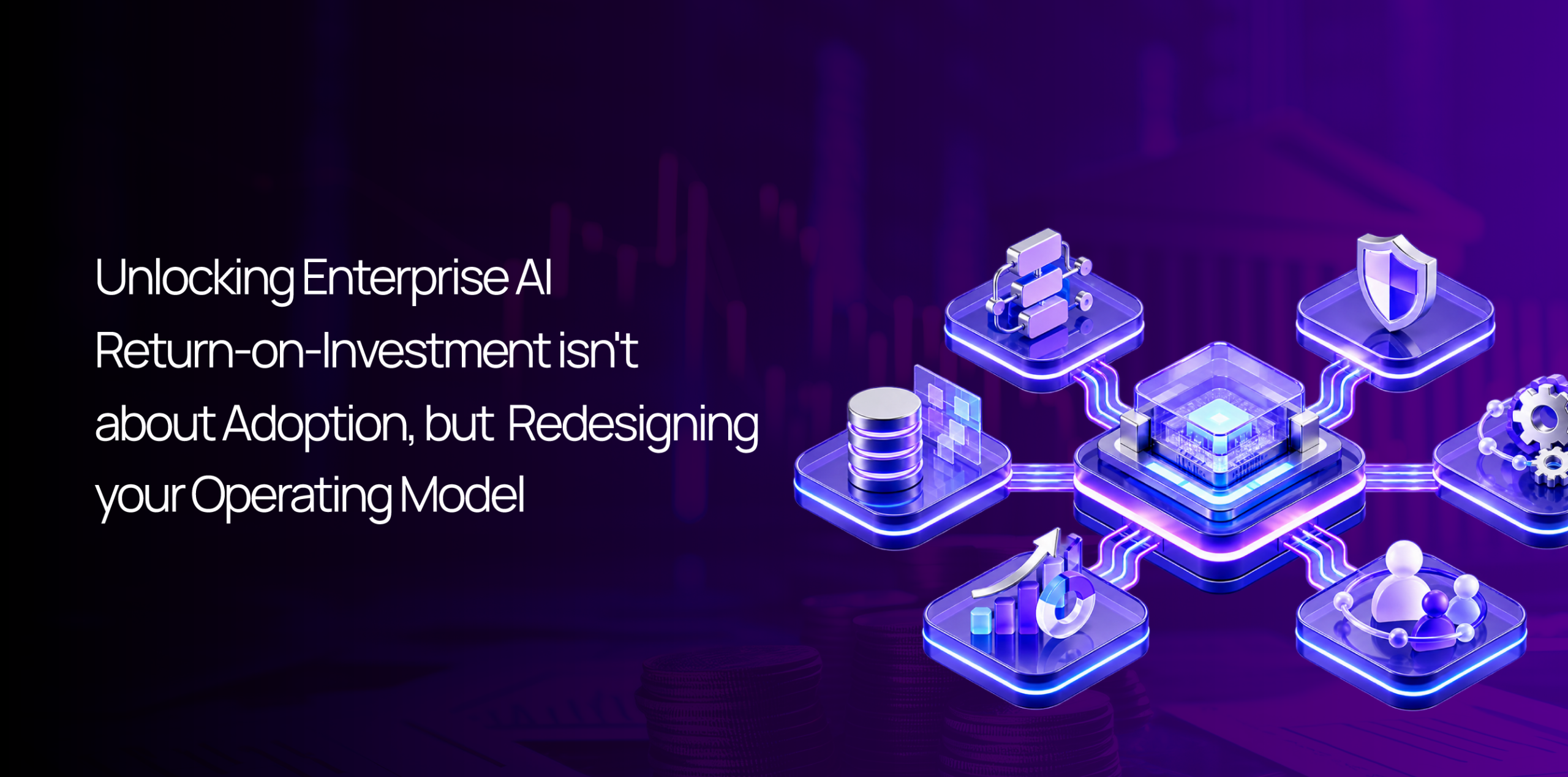
At the enterprise level, agentic AI in real estate architectures are what emerge when multiple agents are coordinated across an organization’s systems and workflows, with governance, observability, and human oversight built into the architecture. It is not a product. It is an operating model.
The distinction matters enormously for real estate leaders evaluating vendors and technology strategies. What the market often calls “AI platforms” are single-purpose tools dressed in agentic language. A genuine agentic architecture spans the operating stack, orchestrating across property management, financials, integration fabric, resident experience, and data systems without replacing any of them.
That last clause is the one most technology leaders need to hear: agentic AI for real estate does not require ripping out the stack. It requires building the right layer above it.

Six Capability Layers Agentic AI in Real Estate Must Orchestrate
A modern real estate enterprise, whether primarily multifamily, commercial, student housing, or mixed, runs on six capability layers. Understanding where agentic AI real estate architecture sits requires understanding what it is being asked to orchestrate across.
| Capability Layer | What It Orchestrates |
|---|---|
| 1. Engagement and demand generation | Listings, brand and property websites, lead capture and qualification, marketing automation, and digital booking across brands, markets, and prospect journeys. |
| 2. Core operations | Leasing and CRM, property management, resident screening, unit and portfolio management, field operations, and inspections. The layer that carries the deepest system complexity at scale. |
| 3. Transactions and financials | Rent collection and payments, lease transaction management, e-signature, AP and AR, revenue recognition, enterprise financials, and investor reporting. |
| 4. Data, intelligence, and decisioning | Market and submarket intelligence, rent and renewal decisioning, property and portfolio valuation, occupancy and performance analytics, and owner and investor reporting. |
| 5. Resident and asset experience | Resident portals and apps, maintenance and service workflows, smart building and IoT, energy and sustainability monitoring, access and security, and community engagement. |
| 6. Integration, identity, and foundation | Integration platforms, identity and access management, API governance, data platform, cybersecurity, and cloud infrastructure. The connective tissue that determines deployment velocity. |
Most large operators run parallel systems in several of these layers simultaneously. That is not dysfunction. It is the natural result of operating at scale, across geographies, with a portfolio that has grown through multiple cycles of acquisition and expansion.
The architectural reality creates one of the least-discussed challenges in real estate technology: integration fabric maturity. The operators who can move fastest with agentic AI in real estate are not those with the simplest stacks. They are those with the most mature integration fabric, with clean APIs, governed data flows, and reliable system-of-record consistency. Agents do not operate in a single system, they orchestrate across all of them.
For chief information officers and chief technology officers evaluating agentic AI in real estate readiness, the first diagnostic question is not about models or platforms. It is about the integration layer: how reliably does data flow between systems today, and how quickly can an automated process read and write across them?

Four High-Value Use Cases for Agentic AI in Real Estate
The agentic AI real estate use cases that matter most for operators in 2026 and beyond are not theoretical. They are emerging from the architectures that forward-thinking operators are building right now.
| Use Case | What Agents Do | Where Value Compounds |
|---|---|---|
| Revenue intelligence with first-party data | Generate pricing and renewal recommendations from proprietary lease, occupancy, and competitive signals with full explainability and human approval gates. | Defensibility against regulatory scrutiny; a compounding data moat that third-party pricing pools cannot replicate. |
| Compliance as an engineering discipline | Screen every automated action against jurisdictional rules, escalate exceptions with full context, and produce machine-readable audit trails. | Shift from periodic review to continuous compliance engineering across pricing, fees, renewals, and screening. |
| Multi-system operational intelligence | Identify patterns, surface anomalies, predict churn risk, and trigger interventions across leasing, financials, maintenance, and communications. | A single view of the resident and the asset that acts on what is about to happen, not just what already did. |
| Asset performance and ESG at portfolio scale | Continuously monitor energy, sustainability, and capital project performance against investment theses and lender covenants. | Capital prioritization that keeps pace with investor reporting, regulatory exposure, and climate risk obligations. |
1. Revenue Intelligence Built on First-Party Real Estate Data
The regulatory environment around algorithmic pricing has fundamentally changed. The era of sharing competitive data through third-party pricing platforms is closing. What replaces it is a genuine opportunity: revenue intelligence built entirely on an operator’s own signals, including lease outcomes, renewal patterns, competitive positioning drawn from publicly available sources, occupancy trends, and resident behavior data.
Agents that generate pricing recommendations from this proprietary foundation, with full explainability and human approval gates, deliver both better defensibility and real competitive advantage. An operator’s own data, refined through AI, is a moat. Someone else’s data pool never was.
2. Compliance Engineering for Pricing and Tenancy Decisions
Two areas of automated decision-making carry significant regulatory exposure for real estate operators: pricing and tenancy decisions. Automated fee application, eviction triggering, renewal terms, and screening decisions all carry legal obligations that vary by jurisdiction and change over time.
Properly architected, agentic AI for real estate treats compliance not as a filter applied at the end of a workflow but as a first-class component of every agent’s decision logic. Every automated action is screened before execution. Exceptions are escalated with full context. Audit trails are complete and machine-readable. The result is a shift from periodic review to continuous compliance engineering, which is where it needs to be in the current environment.
3. Multi-System Operational Intelligence Across the Resident Lifecycle
The resident lifecycle, from inquiry to move-in, renewal, service, and move-out, currently spans more systems than any single operator has full visibility across. Leasing data lives in one system. Financial history in another. Maintenance records in a third. Resident communications in a fourth.
Agents that work across this estate do not just retrieve and report. They identify patterns, surface anomalies, predict churn risk, and trigger interventions against a complete picture of the resident and the asset. The result is qualitatively different from business intelligence. BI tells an operator what happened. Agentic operational intelligence acts on what is about to happen.
4. Asset Performance and ESG Reporting at Portfolio Scale
Energy consumption, sustainability certifications, capital project performance, and climate risk exposure are increasingly material to investor reporting, lender covenants, and regulatory obligations. For operators managing portfolios across multiple geographies, keeping this data current and actionable has historically required significant manual effort.
Agents that continuously monitor asset performance data, cross-reference it against investment theses and sustainability targets, and surface capital prioritization recommendations represent one of the highest-value applications of agentic AI in real estate for operators with institutional capital partners.

The Defining Standard for Agentic AI in Real Estate
For every chief executive and technology leader who has watched an enterprise AI initiative overpromise and underdeliver, governance is the question that matters most. And it is the question the agentic AI market has been slowest to answer honestly.
Governance in an agentic system is not a dashboard. It is an architectural property. It encompasses how agents are designed to fail safely, how model behavior is monitored over time for drift and degradation, how cost is attributed and controlled at the agent and workflow level, how human escalation is triggered and logged, and how the system can be audited in the event of a regulatory inquiry or internal investigation.
Real estate operators building agentic AI in real estate systems need to hold vendors and implementation partners to a specific standard on each of these dimensions, not as a compliance exercise, but as a commercial imperative. The operators who will lead the industry in five years are those who built their AI operating model with governance as a foundation, not those who bolted it on after the fact.
The practical implication for technology leaders: evaluate agentic AI for real estate partners not on the capability of their models, but on the maturity of their observability, evaluation, and governance engineering. The models are largely commoditizing. The engineering discipline around them is not.

From Fragmented Pilots to an Agentic AI Real Estate Operating Model
The path from scattered agentic AI real estate pilots to a coherent agentic architecture is not a single leap. It is a progression that operators can diagnose honestly against the maturity frame below.
| Fragmented Pilots | Coordinated Agents | Agentic Operating Model |
|---|---|---|
| Point solutions per team, per vendor, per system of record. | Agents share data contracts and governance across two or three core layers. | A governed agent fabric orchestrating all six capability layers with observability and human oversight. |
| Governance bolted on at the end of each pilot. | Shared evaluation and escalation pipelines for high-risk decisions. | Compliance, evaluation, cost attribution, and drift monitoring engineered into the architecture. |
| Point-solution ROI that plateaus after each deployment. | Reusable agent primitives accelerate the next initiative. | Integration investment, modernization, and agent capability compound with every engagement. |
Most operators sit somewhere in the first two columns. The commercial advantage accrues to those deliberately engineering toward the third, where agentic AI in real estate is no longer a project portfolio but an operating capability.

Three Strategic Questions for Real Estate Executives Evaluating Agentic AI
For chief executives and business leaders who sit outside the technical stack but are accountable for the outcomes it produces, the conversation needs to be grounded in three strategic questions.
1. Where Does First-Party Data Give the Business a Genuine Advantage?
Every operator has proprietary data that a third party cannot replicate, including resident behavior, maintenance outcomes, lease performance, energy patterns, and asset-level financial history. The operators who will extract the most value from agentic AI are those who systematically identify this data advantage and build AI systems that exploit it. The question for the chief executive: is the business treating its data as a strategic asset, or as a byproduct of operations?
2. Which Automated Real Estate Decisions Carry Unmapped Risk?
The expansion of automated decisioning across real estate, from pricing to tenancy to compliance, has largely outpaced the governance frameworks that should surround it. The question for the chief executive and general counsel is not whether to automate, but whether the automation is defensible. Properly implemented agentic systems make automation more defensible. But only if the question is asked before the architecture is built.
3. Compounding Returns or One-Time Efficiency Gains?
Operators who treat agentic AI for real estate as a series of point solutions, with one agent for leasing, one for maintenance, one for pricing, will realize point-solution returns. Operators building a shared agentic backbone, where integration work feeds modernization, modernization enables more capable agents, and every engagement builds on the last, are building a compounding technology advantage. That is an architectural choice, and it needs to be made at the executive level, not delegated to IT.
The Competitive Window for Agentic AI in Real Estate
Real estate has often taken a measured approach to enterprise technology adoption, allowing early adopters to absorb the cost and instability of immature platforms before committing capital. That pattern does not hold with agentic AI. The organizations building now are not taking on early risk in the traditional sense; they are establishing proprietary data assets, governance structures, and integration layers that create durable competitive barriers. These foundations compound over time and are not easily replicated by late entrants. The opportunity to differentiate through agentic architecture is open, but it is time-bound.
For real estate technology and business leaders, the priority is to move beyond fragmented pilots and establish a coherent agentic operating model. That model needs governance as a control layer and first-party data as the primary source of advantage. Agentic AI is actively reshaping how the industry operates, from decisioning to orchestration across systems. The question is not whether change is coming, but which organizations will define how it unfolds.
AppsTek supports this shift through a set of tightly integrated capabilities. Its agentic AI services focus on designing, governing, and operationalizing enterprise-grade agent fabrics. Its enterprise AI approach for real estate centers on AI-driven software engineering structured across the six capability layers most relevant to operators. Application modernization work establishes the integration fabric required to deploy agentic capabilities at speed, while integration services enable agents to coordinate across property management, financial systems, and resident experience platforms.
AppsTek Corp delivers AI-driven data engineering services for real estate enterprises across agentic AI, application modernization, quality engineering, and integration. With over 19 years of enterprise engineering experience and a dual-shore delivery model, the company works with large-scale operators to build agentic systems that perform reliably in production environments. To connect with our experts, click here.
Frequently Asked Questions
Agentic AI uses autonomous software agents to plan, decide, and execute tasks across systems. In real estate, it connects leasing, property management, finance, and tenant engagement into a single operating layer. This improves decision speed, data utilization, and scalability, making it a key driver of digital transformation in real estate.
Agentic AI reduces manual work by automating leasing workflows, maintenance coordination, and financial processes. It enables real-time orchestration across property management systems and CRMs, which lowers delays, reduces errors, and improves portfolio-wide operational efficiency.
Agentic AI drives higher revenue through dynamic pricing, faster leasing cycles, and better tenant retention. It also reduces costs with automation and predictive maintenance. The result is improved NOI, stronger asset performance, and more informed investment decisions.

About The Author
Rahul Sudeep, Senior Director of Marketing at AppsTek Corp, is a results-driven, AI-first B2B marketing leader with 15 years of experience scaling global enterprise SaaS companies. His expertise, honed at IIM-K, spans architecting high-impact go-to-market strategies, driving new market identification and positioning, and embedding Generative AI, LLMs, and predictive analytics into the core marketing function. Rahul unifies Technology, Sales, and Support teams around a single strategic hub, while also managing key Partner and Investor Relations. He leverages AI-driven insights to craft powerful brand narratives and hyper-personalized demand generation campaigns that drive measurable revenue growth and deepen customer engagement.