
Hyderabad, July 9, 2026: AppsTek CEO Sanjoy Roy and Senior Director of Marketing Rahul Sudeep attended Forrester’s Executive Roundtable for Technology Leaders at Le Méridien Hyderabad.
The session, titled “Making Agentic AI Work for You, and Keeping It Under Control,” was led by Forrester analysts Ashutosh Sharma and Leslie Joseph. It brought together technology and business leaders to discuss why widespread AI adoption has yet to translate into comparable enterprise results.
A key theme was the gap between individual productivity gains and measurable business impact. While AI tools are already helping employees improve performance across a range of tasks, their effect on enterprise financial outcomes remains limited.
The discussion focused on the need to move beyond task-level AI adoption and rethink how work is structured across the enterprise.
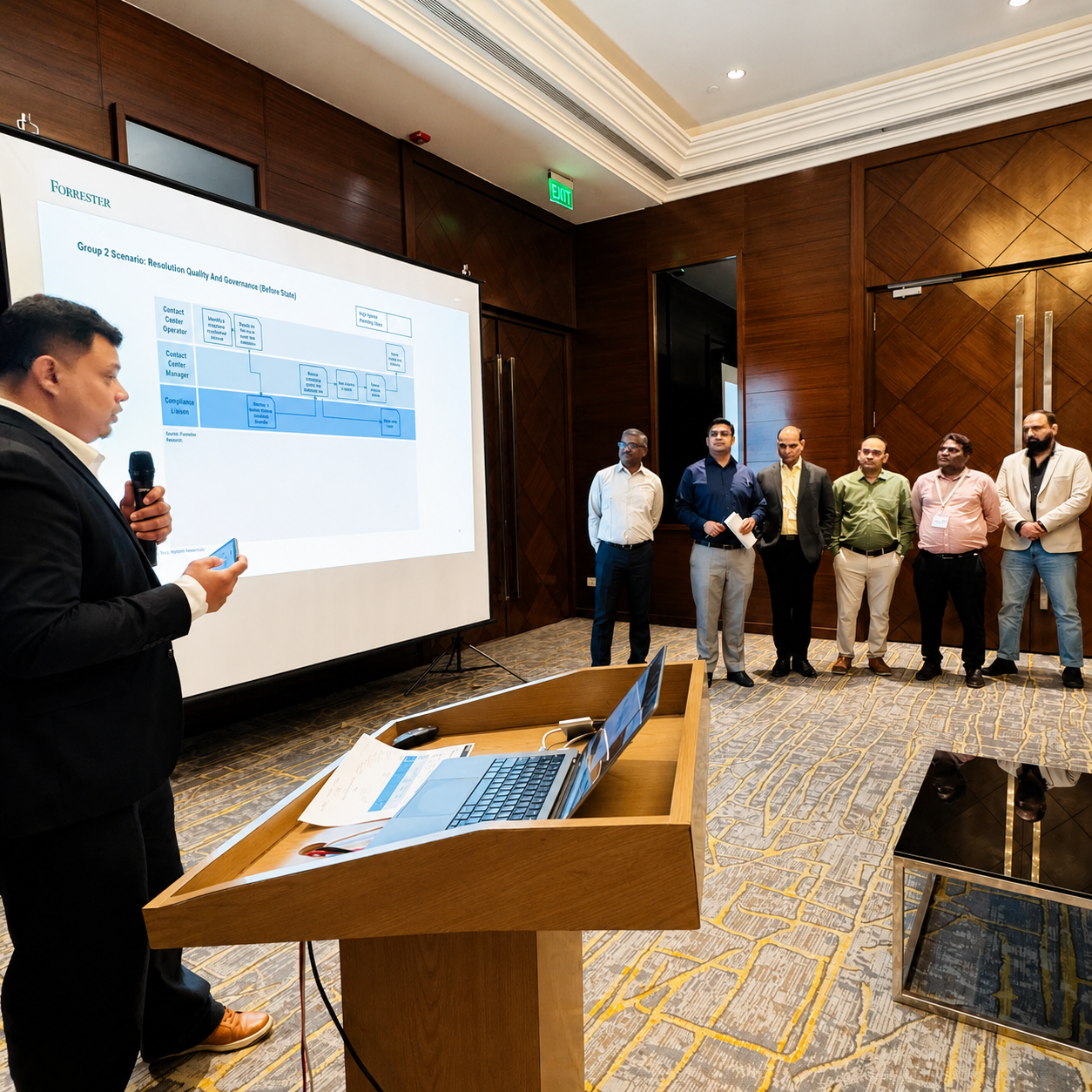
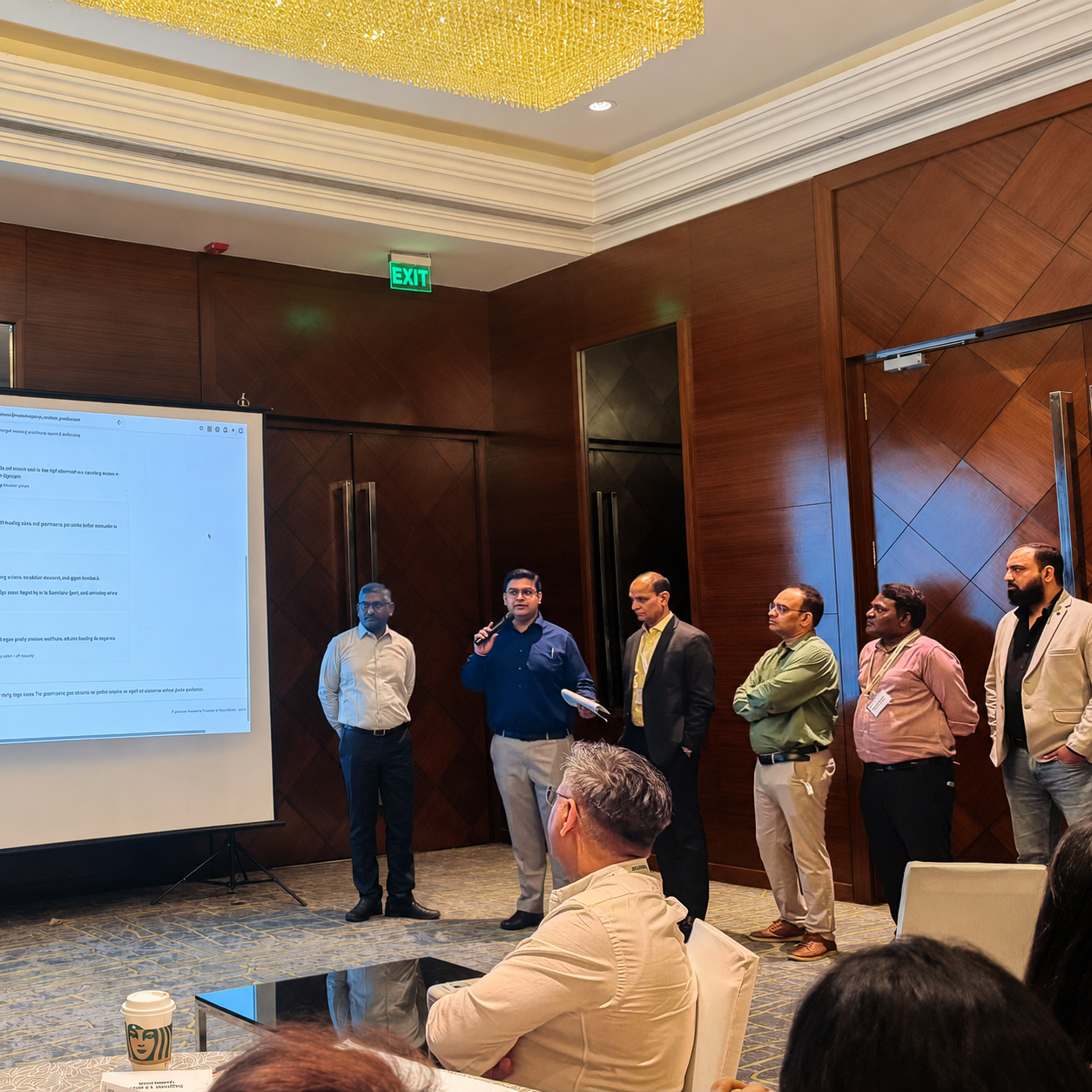
Forrester framed this as the distinction between AI adoption and AI reinvention. Adoption improves the way existing work is carried out, while reinvention examines how roles, workflows, and operating models should evolve as AI agents take on a larger share of routine cognitive work.
Ashutosh Sharma outlined five recurring barriers that continue to limit enterprise AI value. These included the absence of a clear vision, an excessive focus on isolated use cases, and the middle-management bottleneck. The session positioned these as operating-model and leadership challenges rather than technology constraints.
Leslie Joseph presented four modes through which AI can influence an organization: augmentation, automation, enrichment, and reinvention. The framework helped distinguish incremental productivity improvements from more fundamental changes in how value is created.
The roundtable also explored the idea of managing AI skills as products. In Forrester’s framing, a skill is a reusable cognitive capability with defined ownership, versioning, telemetry, governance, and a roadmap for continuous improvement.
These skills can be combined into agent roles and orchestrated across broader business workflows, creating a more structured foundation for enterprise-scale agentic AI.