Agentic AI in Finance & BFSI : Real Use Cases Worth Watching
Agentic Application
Modernization for Enterprise
Legacy Systems
Modernize legacy applications with AI agents that analyze, plan, and transform systems with intelligent orchestration. Accelerate modernization timelines while maintaining enterprise control.
Agentic Application Modernization
Agentic App Modernization that
Restructures Complex Application Landscapes
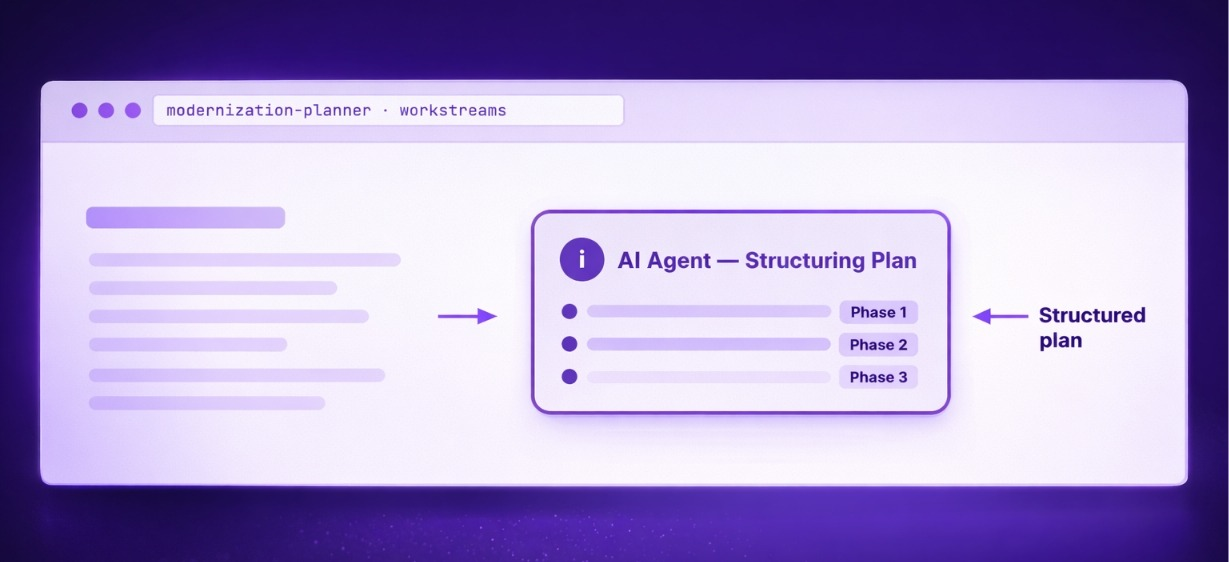
AI agents analyze application dependencies, extract logical structures from legacy code, and generate structured modernization plans that improve delivery predictability across complex environments.
Multi Agent Modernization Framework
AI agents collaborate across analysis, planning, code transformation, and validation to reduce manual coordination and accelerate execution.
Intelligent Code Transformation
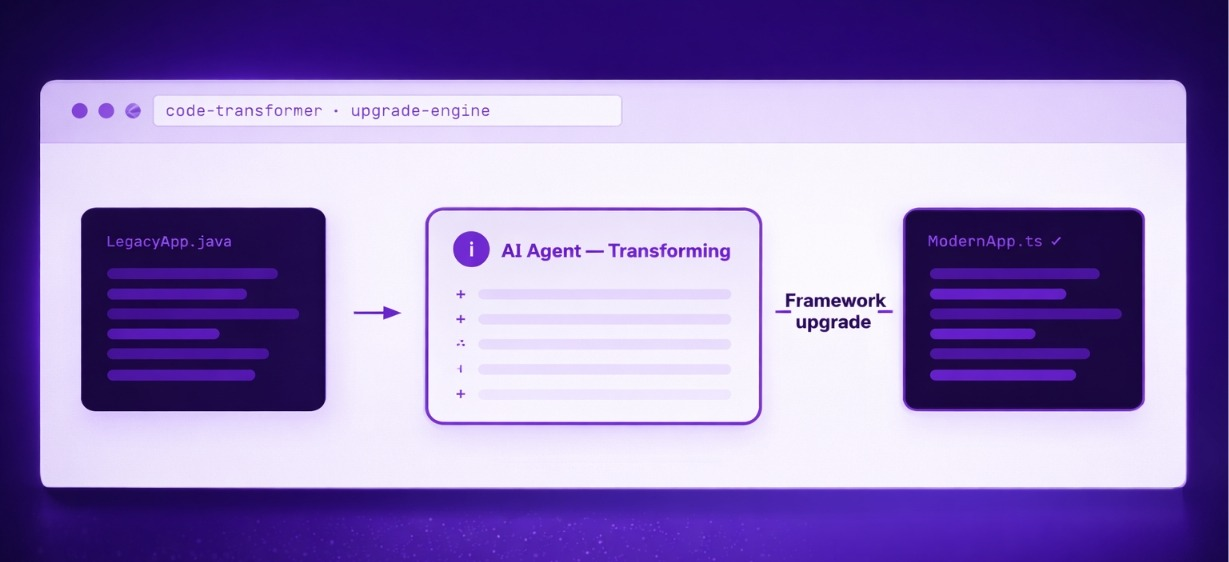
Context aware modernization of legacy applications including framework upgrades, architectural restructuring, and cloud alignment.
Autonomous Workflow Modernization
Structured task decomposition and automated execution planning reduce modernization timelines and improve delivery predictability.
Enterprise Governed Execution
Human oversight ensures compliance, security alignment, and production ready validation throughout the modernization lifecycle.
.
Transformation Impact
Quantifiable gains across cost, coordination, and modernization efficiency.
>60 %
Faster Modernization Timelines
>50 %
Reduction in Delivery Cost
>65 %
Automation Across Codebases
80 %
Lower Coordination Overhead
The Agentic Application Modernization Workflow
A structured, AI agent enabled lifecycle that guides legacy system transformation from discovery to production readiness with controlled execution and architectural oversight.
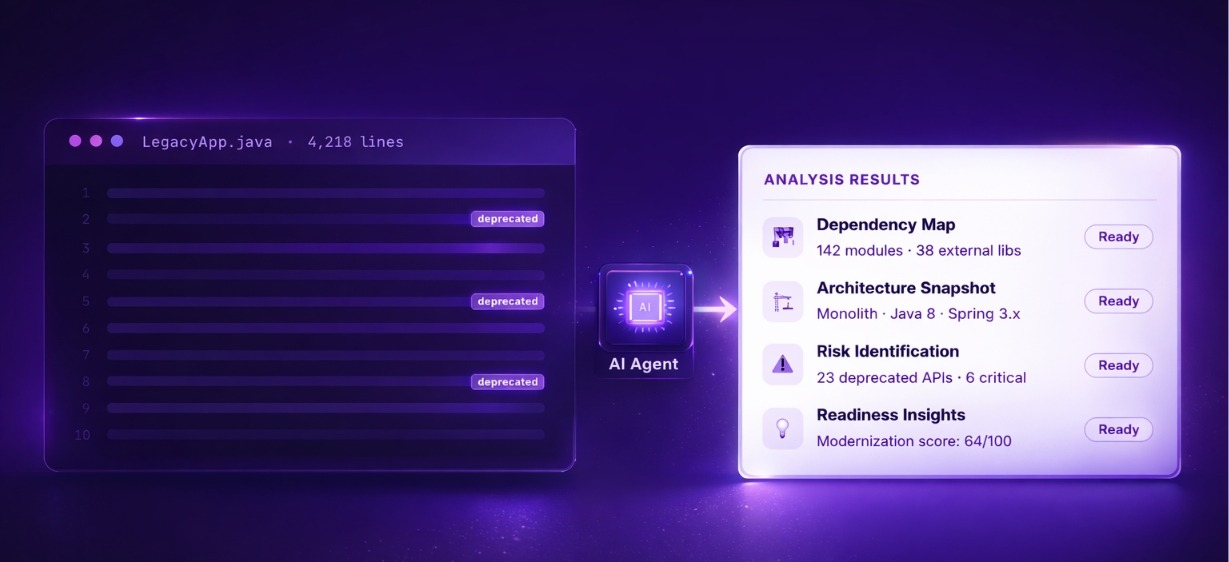
AI agents scan the legacy codebase to map dependencies, identify framework versions, detect deprecated components, and generate baseline documentation.
- Dependency map
- Architecture snapshot
- Risk identification
- Modernization readiness insights
The system structures modernization into executable workstreams, generating task breakdowns, milestones, and implementation sequencing aligned to the target architecture.
- Structured modernization roadmap
- Auto generated work items
- Transformation sequencing plan
Intelligent code transformation upgrades frameworks, restructures application layers, replaces deprecated APIs, and prepares cloud aligned project scaffolding.
- Updated codebase
- Framework upgrades
- Restructured architecture components
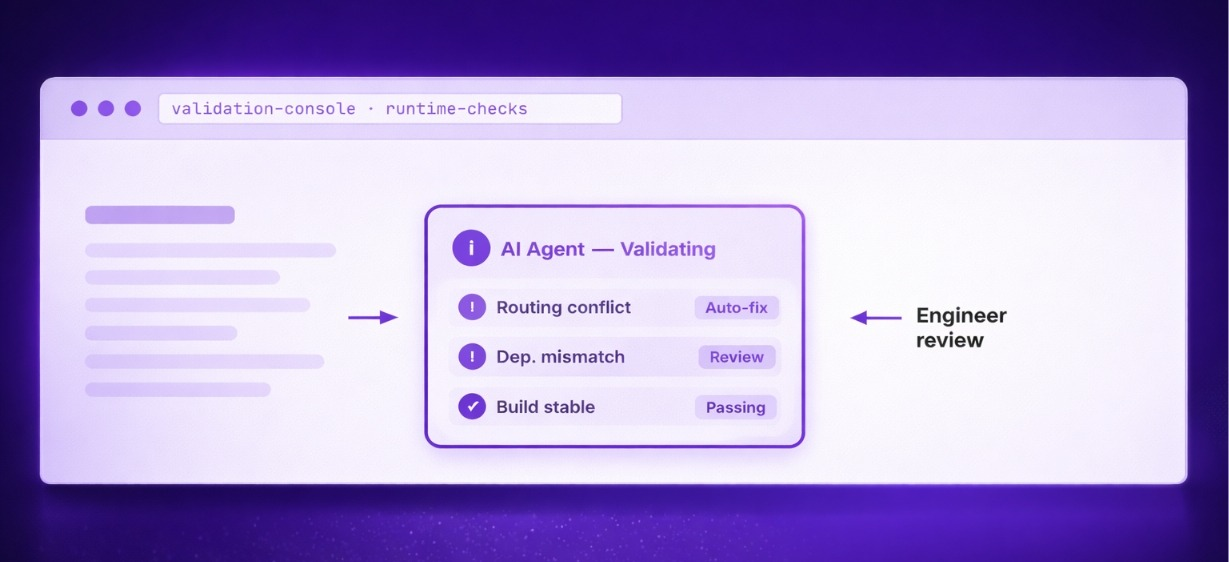
AI assisted validation detects runtime issues, routing conflicts, dependency mismatches, and configuration gaps. Engineers review and refine critical components.
- Stabilized application build
- Configuration alignment
- Risk mitigation adjustments
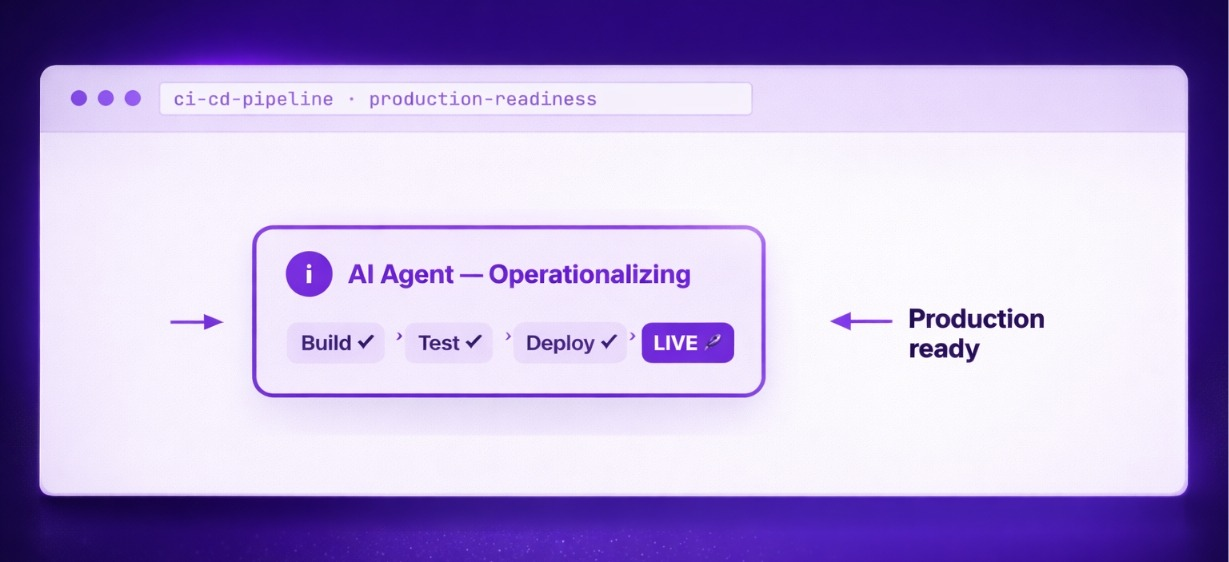
The modernization process integrates CI CD pipelines, environment configuration, logging, monitoring, and performance enhancements to ensure production readiness.
- DevOps ready pipelines
- Deployment scripts
- Observability integration
- Production grade validation
Multi-Agent Orchestration Across Enterprise
Modernization Scenarios
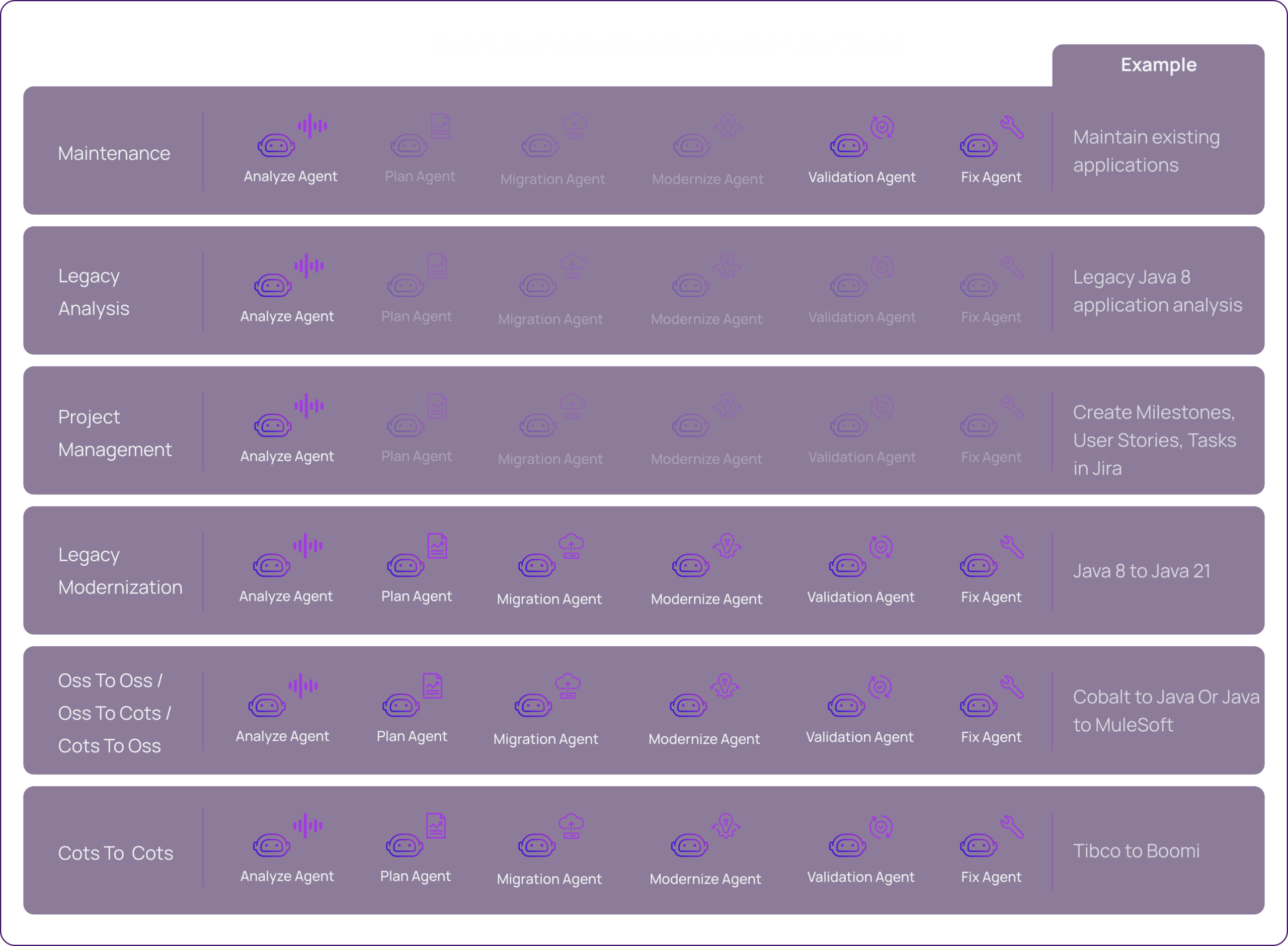
The Multi-Agent Modernization Framework adapts to the scope of the initiative, dynamically coordinating specialized agents across analysis, transformation, and validation stages to align with enterprise modernization goals.
Enterprise Application Modernization with AI Agents in Action
Delivering Intelligent Application Modernization through an AI Modernization Accelerator built for complex enterprise environments.
Modernize applications built on outdated frameworks including .NET Framework, Java 6 or 7, COBOL, and legacy C++ systems. Upgrade to modern runtimes while preserving core business logic and operational continuity.Â
Ideal for:Â
- End of support frameworksÂ
- High maintenance legacy applicationsÂ
- Compliance driven upgradesÂ
Restructure tightly coupled monolithic applications into modular, cloud ready architectures with clearer service boundaries and deployment independence.Â
Ideal for:Â
- Scalability constraintsÂ
- Cloud migration initiatives
- Performance bottlenecksÂ
Upgrade legacy platforms such as Java 7 to Java 21, .NET Framework to modern .NET, or Angular to modern frontend stacks while minimizing regression risk.
Ideal for:Â
- Security patch requirementsÂ
- Performance optimizationÂ
- Modern DevOps alignmentÂ
Transform applications from one language or runtime to another while maintaining architectural consistency and business functionality.Â
Ideal for:Â
- Java to GoÂ
- Java to PythonÂ
- Legacy platform to cloud native stackÂ
Modernized applications are aligned with CI CD pipelines, environment configuration standards, logging frameworks, and monitoring integrations.Â
Ideal for:Â
- Cloud adoptionÂ
- Infrastructure automationÂ
- Production readiness transformationÂ
Support modernization in highly regulated and complex environments including:Â
Ideal for:Â
- Financial servicesÂ
- Healthcare systemsÂ
- Manufacturing platformsÂ
- Telecommunications infrastructureÂ
Agentic Application Modernization vs
Traditional Legacy Modernization: What Is the Difference?
A comparison of traditional legacy system modernization approaches and a multi agent modernization framework built for structured, enterprise scale execution.
| Capability Area | Traditional Legacy Modernization | Agentic Application Modernization |
|---|---|---|
| System Discovery | Manual code review and SME dependency | AI driven dependency analysis and structured system mapping |
| Modernization Planning | Workshop heavy planning and documentation cycles | AI assisted roadmap generation with structured task decomposition |
| Code Transformation | Manual refactoring across teams | Intelligent code transformation with automated issue detection |
| Coordination Overhead | Multiple expert teams with high communication load | Multi agent orchestration reduces manual coordination |
| Timeline Predictability | Variable timelines with rework risk | Structured workflow modernization improves delivery predictability |
| Framework Upgrades | Incremental and resource intensive | Accelerated framework and version modernization with validation support |
| DevOps Alignment | Separate post modernization effort | Integrated CI/CD and enterprise workflow integration |
| Risk Management | Late stage runtime discovery | Continuous validation and assisted issue resolution |
| Human Involvement | Fully manual execution model | Human governed, AI accelerated execution model |
Move Beyond Traditional
Modernization Approaches
What Sets Agentic Application Modernization Apart
We combine AI agents and an AI Modernization Accelerator to improve predictability across Legacy System Modernization initiatives.
Multi Agent Execution
AI agents coordinate discovery, planning, migration, validation, and issue resolution.
Lifecycle Coverage
From legacy discovery to production readiness within a structured modernization model.
Enterprise Integration
Aligned with Git, Jira, CI CD pipelines, and enterprise governance standards.
AI Modernization Accelerator
An internal acceleration engine that improves speed, consistency, and modernization efficiency.
Intelligent Issue Resolution
Automated detection of migration conflicts, deprecated APIs, and configuration gaps.
Frequently Asked Questions (FAQs)
Agentic Application Modernization is an AI enabled approach to legacy application modernization where specialized AI agents assist in system analysis, planning, code transformation, and validation within a structured enterprise framework.Â
Traditional legacy modernization relies heavily on manual coordination and refactoring, while agentic application modernization uses AI agents to structure execution, reduce coordination overhead, and improve delivery predictability.Â
AI agents can automate significant portions of legacy system modernization, including code upgrades and issue detection, but enterprise oversight remains essential for architectural and business critical decisions.Â
Depending on system complexity, agentic application modernization can automate approximately 45 to 75 percent of code transformation and modernization workflows.Â
Yes. The multi agent modernization framework is designed to support complex enterprise environments including legacy application modernization across regulated and high dependency systems.Â
An AI modernization accelerator reduces manual effort, generates structured execution plans, detects migration issues early, and supports faster delivery compared to traditional modernization models.Â
INSIGHTS
Enterprise Modernization Insights
Guidance on navigating legacy system transformation with AI agents and structured execution.
Banking & Financial Services
Turning Weeks into Minutes: How Agentic Process Automation Redefined Banking OnboardingÂ
Animal Health & Veterinary Services
Smarter Verification, Faster Care: Agentic Process Automation in Animal Health
Modernize Smarter with AI Agents
Plan, transform, and execute with enterprise grade control.Â