

Table of Contents
Is Your Procurement Modernization Strategy Missing the Data Link?

When we sit down with Chief Data Officers and Heads of Procurement, the conversation often begins with operational friction. Approvals take too long, supplier onboarding slows down business teams, and purchase orders move slower than the organization expects.
Everyone wants faster approvals, quicker onboarding, and more rapid purchase order generation. While speed is certainly a valid operational metric, focusing on it exclusively misses the larger picture of what actually drives market leadership today.
The organizations that are truly separating themselves from the pack aren’t just moving faster; they are operating with a higher degree of procurement intelligence. They have realized that the ability to see, understand, and act on spend data the moment it is generated is far more valuable than simply processing a transaction quickly.
There is often a misconception among leadership that User Experience (UX) is merely a cosmetic upgrade—a “nice to have” layer that makes screens look modern. This perspective fundamentally misunderstands the relationship between human behavior and data quality.
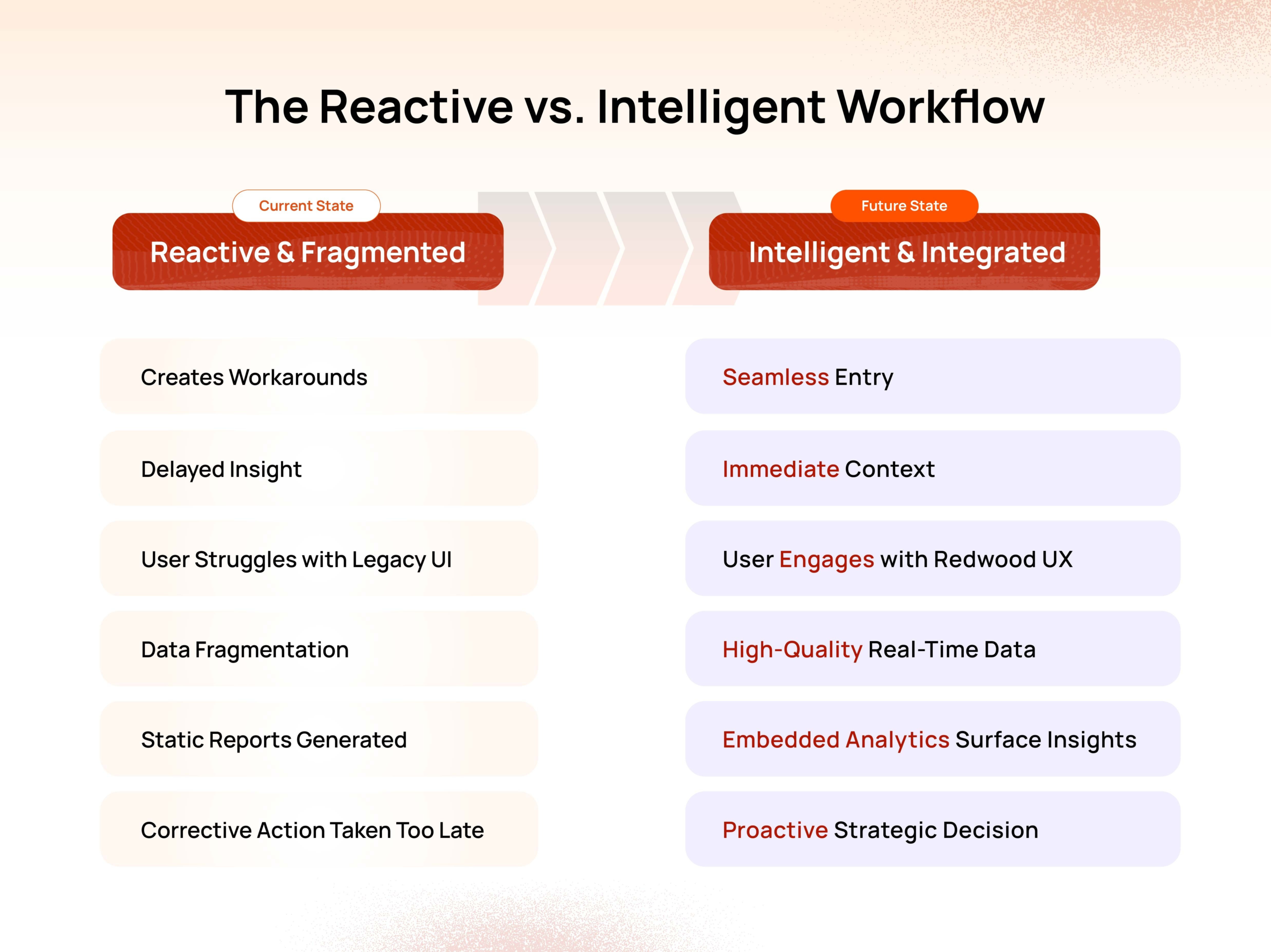
UX is actually a strategic prerequisite for high-quality Procurement Data. When users are forced to navigate clunky, counter-intuitive interfaces, they inevitably find workarounds to get their jobs done. These workarounds are where data integrity goes to die, creating the very data fragmentation that kills your AI strategy before it even gets off the ground.
Why Data Fragmentation Stalls Big Data Analytics in Procurement

Consider the daily reality for many enterprise procurement teams. They are sitting on a goldmine of information, yet valuable insights remain trapped behind fragmented spreadsheets, legacy user interfaces, and static reports that are effectively obsolete the moment they are exported.
Ultimately, this creates a silent crisis where decision-makers are forced to play the role of detective, spending their valuable time hunting for the “why” behind a budget variance or a delayed shipment rather than addressing the issue itself.
Such a dynamic creates a reactive cycle that destroys organizational agility. Instead of acting as a strategic partner that drives value, procurement remains trapped in the role of a cost center, constantly putting out fires that could have been predicted.
Oracle Redwood as the Interface for Procurement Intelligence

Oracle Redwood signals a shift in how procurement professionals experience their systems. It moves the function beyond static screens and passive reporting toward intelligence that is embedded directly into everyday work.
Instead of sending category managers off to a separate analytics view, Redwood brings insight into the moment of action. Information appears where decisions are made, changing the system’s role from something you navigate to something that quietly answers a critical question in real time: what do I need to know right now to move forward with confidence? Check how Oracle Redwood redefines change management in procurement.
Status Indicators for At-a-Glance Clarity
A dashboard should explain itself at first glance. Redwood’s modern interface uses contextual UI indicators (often implemented as interactive chips) to show status and recommended actions where decisions are made.
Instead of a vague label like “Pending Approval,” users see clear, color-coded cues such as “Action Required: Budget Variance.” These signals are not decorative. Each chip opens directly into the relevant context, revealing whether a request is waiting on a specific approver or a supplier document is nearing expiration. In practice, they function as an early warning layer, surfacing friction before it turns into delays that ripple through the supply chain.
KPI Dashboards Built for Data-Driven Procurement
Redwood reimagines the procurement landing page as a working cockpit, not a static task list. From the moment users log in, configurable KPI views surface live signals on spend, compliance, and supplier performance.
For a CPO, this means immediate visibility into patterns like maverick spend without waiting for periodic reports. For category managers, it means risk scores appearing alongside renewal actions, making context unavoidable at the moment of decision. The system stops reporting on yesterday’s outcomes and starts actively shaping today’s choices.

The Future of Procurement Shaped by Predictive Analytics and AI Agents
If embedded analytics power modern procurement, AI provides its sense of direction. The discipline is moving beyond systems that explain what happened toward platforms that actively recommend what to do next. Oracle’s AI roadmap is centered on turning insight into guidance, without adding friction to the process.
That shift is already taking shape. AI-driven supplier recommendations weigh past performance, market signals, and compliance requirements to surface the best option for each scenario.
In contract management, intelligent agents propose clauses tailored to category and geography, helping teams move faster without compromising compliance. In parallel, automated anomaly detection works quietly in the background, scanning transactions to identify fraud or duplicate invoices with a level of accuracy that manual reviews struggle to achieve. Check this quick playbook on how Oracle Redwood reimagines procurement, from requestor to supplier.
The Rise of Predictive, AI-Guided Procurement
Modern procurement is no longer defined by systems that simply explain the past. With embedded analytics as the foundation, AI is increasingly guiding decisions in real time, helping teams understand not just what happened, but what to do next. Oracle’s AI vision focuses on turning insight into action, seamlessly woven into everyday work.
That evolution is already visible. AI can recommend suppliers by balancing historical performance, market conditions, and compliance requirements. Intelligent agents assist contract creation by suggesting clauses aligned to category and region, accelerating negotiations without increasing risk. At the same time, anomaly detection runs continuously in the background, flagging fraud or duplicate invoices with a level of precision that manual review cannot realistically achieve.
What This Means for the C-Suite

For CDOs and procurement leaders, modernization is not simply an IT refresh. It is a data strategy that determines how effectively the organization learns, adapts, and acts.
Adopting Oracle Redwood creates the foundation for advanced analytics in procurement, transforming data from a historical record into a forward-looking decision asset.
If you are ready to turn procurement data into a strategic advantage, AppsTek Corp can help guide your Redwood journey. Contact us to know more.

About The Author
Myrlysa I. H. Kharkongor is Senior Content Marketer at AppsTek Corp, driving content strategy for the company’s digital engineering services to enhance brand presence and credibility. With experience in media, publishing, and technology, she applies a structured, insight-driven approach to storytelling. She distills AppsTek’s cloud, data, AI, and application capabilities into clear, accessible communications that support positioning and grow the brand’s digital footprint.