
Table of Contents
Enterprise software implementations have historically required organizations to choose between accepting standard functionality or creating customizations that risk breaking during updates. This trade-off affects planning, budgets, and how quickly organizations can adopt new Oracle capabilities.
The combination of Oracle Redwood user experience and Visual Builder Studio changes this equation. Organizations now have structured paths to tailor Oracle Fusion Applications without compromising upgrade stability or creating technical debt.
What is the Difference Between Customization and Extensibility?

Oracle distinguishes clearly between customization and extensibility, each serving a different purpose and risk profile.
What Is Customization?
Customization, within Oracle, refers to configuration-driven changes made within the boundaries of existing Oracle functionality. These typically include:
- Adjusting page layouts and field visibility
- Defining validation rules and conditional logic
- Configuring workflows using declarative tools
- Managing role-based behavior using security and setup options
These changes operate through Oracle’s metadata layers, which are designed to persist across quarterly updates when implemented using supported tools and configurations.
Customization is best suited for process alignment, not for creating new application capabilities.
What Is Extensibility?
Extensibility addresses requirements that go beyond standard functionality. This includes:
- Creating new business objects and data models
- Building custom user experiences and interfaces
- Integrating external systems using REST APIs
- Adding orchestration logic and automation
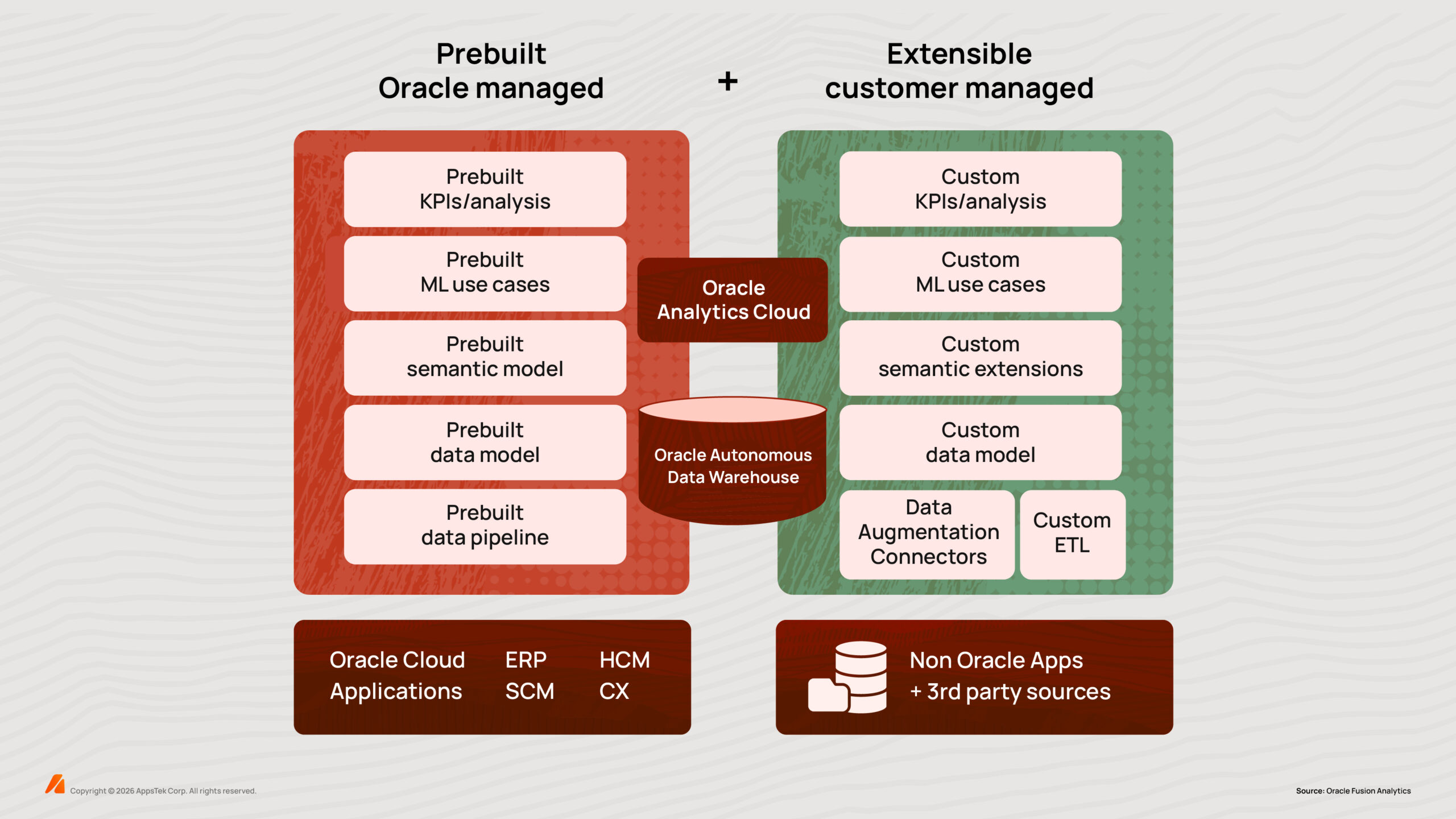
Oracle supports extensibility through documented APIs, platform services, and development tools that are architecturally separated from core application code. This separation reduces upgrade impact when extensions follow supported patterns.
The Oracle Cloud Extensibility Framework exposes APIs and development platforms for building on top of core applications.
How Oracle Visual Builder Studio Supports Enterprise Extensibility

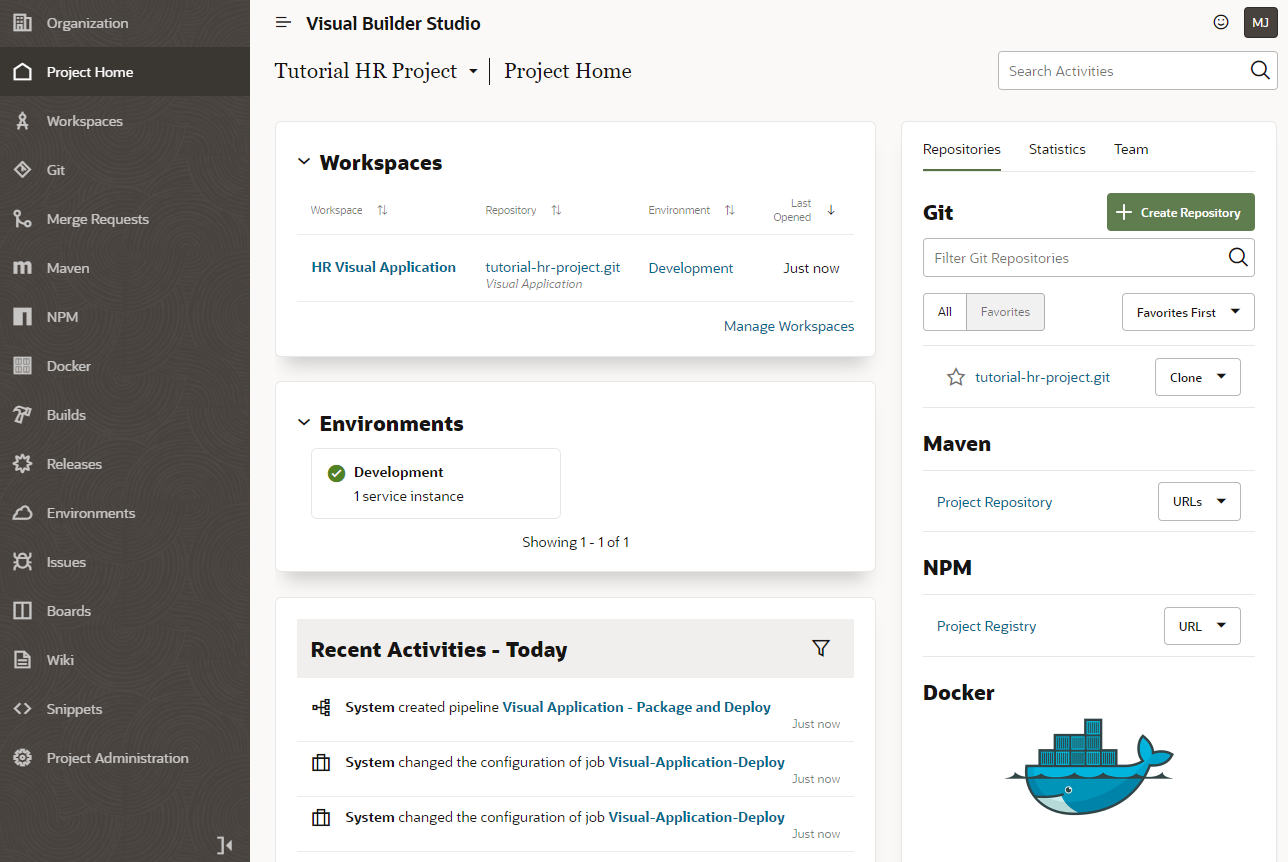
Oracle Visual Builder Studio is Oracle’s strategic platform for building, managing, and delivering Visual Studio extensions to Oracle Cloud Applications. The same development environment used internally by Oracle teams has been adapted for customer and partner use. Key Capabilities include:
Guaranteed Compatibility and Upgrade Safety
- Automatic inclusion of new features when Oracle releases updates
- Extensions following identical architectural patterns as core applications
- Documented APIs and metadata layers surviving quarterly updates
- Isolated extension architecture separate from core code
- Automated compatibility testing during upgrades
Enterprise DevOps Built In
- Integrated Git repositories for version control
- Automated CI/CD pipelines for continuous delivery
- Agile project management and issue tracking
- Built-in testing frameworks and sandbox environments
Oracle Redwood Design System
The Oracle Redwood Design System is Oracle’s standardized UX framework for Fusion Applications, defining consistent components, layouts, and interaction patterns. Extensions built with Visual Builder Studio inherit Redwood UX by default, ensuring they feel native while remaining aligned with Oracle updates and upgrade paths.
What Makes Redwood Applications Different for Oracle Extensions?

The Redwood Design System provides architectural foundation ensuring custom extensions feel native to Oracle applications. Developers automatically leverage Redwood-themed components:
- Waterfall layouts for progressive content loading
- Action cards for dashboard interfaces
- Modern form controls with built-in validation
- Navigation patterns consistent with Oracle applications
Key Benefits of Redwood
As Oracle evolves Redwood, extensions automatically inherit updates without manual maintenance. Extensions also use the service catalog to access Oracle Cloud Applications. They do this with the same security, validation rules, and business logic as the core applications.
How Redwood and Visual Builder Studio Work Together

Individually, Redwood and Visual Builder Studio provide value. Together, they form a cohesive extensibility model that supports both business agility and architectural stability.
Low-Code Page Extensions for Functional Teams
Visual Builder Studio supports a low-code approach that allows functional administrators to extend application pages within defined boundaries.
Typical use cases include:
- Conditional field visibility based on role or context
- Page-level validation and defaulting logic
- Adding custom fields while preserving Redwood UX standards
- Enforcing business rules without altering core workflows
This model enables faster iteration on common requirements while reducing dependency on development teams for routine changes.
Pro-Code Advanced Mode for Complex Requirements
For scenarios that exceed declarative capabilities, Visual Builder Studio supports advanced development using JavaScript, REST services, and Oracle platform services.
Examples include:
- Composite interfaces spanning multiple Oracle modules
- External system integrations
- Advanced calculations and orchestration logic
- Analytical views combining operational data
Both low-code and pro-code methods work on the same platform. This allows business and technical teams to collaborate without breaking the architecture.
Upgrade Alignment and Long-Term Maintainability
Oracle’s extensibility model emphasizes architectural separation and documented interfaces. Key principles include:
- Extensions reside outside core application code
- Platform services are versioned and supported
- Oracle validates platform compatibility during quarterly updates
- Guidance and migration paths are provided when platform changes occur
While customers remain responsible for testing their specific extensions, this approach significantly reduces the risk traditionally associated with customization-heavy environments.
Oracle Redwood Implementation with Visual Builder Studio for Scalable Enterprise Extensibility

Most businesses use standard Oracle Cloud features for their main operations. However, a few specific needs still create complexity and differences.
Historically, meeting these requirements required heavy customization, higher upgrade overhead, and long-term maintenance exposure. With Oracle Redwood implementation with Visual Builder Studio, organizations gain a supported extensibility framework that fundamentally shifts this approach, enabling tailored experiences without compromising upgradeability, governance, or long-term sustainability.
- Extensibility becomes intentional rather than reactive, using documented tools and APIs instead of workarounds.
- Business and IT work on a shared platform, combining low-code and pro-code extensions without fragmenting the architecture.
- Upgrade impact is reduced and more predictable, as extensions remain separated from Oracle-managed code.
- Technical debt is controlled, supporting long-term stability and lower maintenance effort.
A Supported Path to Oracle Extensibility
Oracle Redwood and Visual Builder Studio enable a supported approach to extending Oracle Fusion Applications without the risks of traditional customization. By separating extensibility from the main application logic, organizations can adapt to changing business needs. This approach aligns with Oracle’s documented architecture. It helps maintain upgrade stability and long-term maintainability.
AppsTek Corp helps enterprises extend Oracle Fusion Cloud Applications using Redwood and Visual Builder Studio in a manner consistent with the Oracle Redwood Design System and Oracle’s supported architecture and release model. By combining upgrade-safe extensibility with practical governance, organizations can adapt faster without destabilizing their core systems.
Our Oracle services enable long-term flexibility and reduced risk. Contact us to define a clear Redwood and Visual Builder Studio extensibility strategy for your enterprise.

About The Author
Myrlysa I. H. Kharkongor is Senior Content Marketer at AppsTek Corp, driving content strategy for the company’s digital engineering services to enhance brand presence and credibility. With experience in media, publishing, and technology, she applies a structured, insight-driven approach to storytelling. She distills AppsTek’s cloud, data, AI, and application capabilities into clear, accessible communications that support positioning and grow the brand’s digital footprint.